COTABATO CITY (April 3) — Twin explosions in the quiet town of Rajah Buayan on Wednesday have once again exposed how political rivalries in Maguindanao del Sur are spilling into violence—with local officials quick to point fingers but offering little in the way of proof.
Rajah Buayan Mayor Bai Maruja Ampatuan-Mastura blamed “political partisans” for the attacks, which unfolded within an hour and briefly sent residents fleeing in panic. But even as accusations flew, no suspects were publicly identified—highlighting a recurring pattern in election-season violence across the Bangsamoro region.
The first blast came just after 7 a.m., when two men on a motorcycle hurled a grenade at the home compound of one of the mayor’s relatives. The explosive fell short, detonating outside the property and injuring no one. Witnesses said the attackers fled quickly after drawing attention.
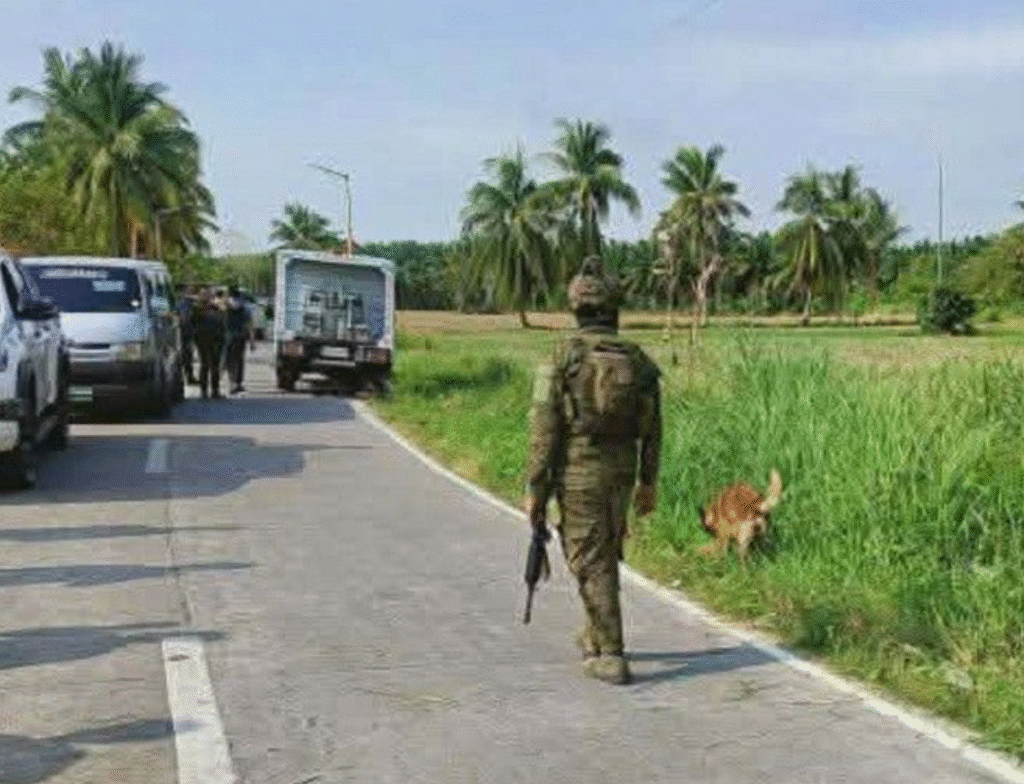
An hour later, a second explosion—this time from an improvised explosive device—targeted a responding police patrol. The blast went off near a roadside solar lamp, narrowly missing eight officers aboard the vehicle.
The mayor’s husband, Datu Tucao Mastura, rushed to the scene and publicly challenged unnamed rivals to “come out in the open,” framing the attacks as harassment tied to local power struggles.
But beyond rhetoric, authorities have yet to confirm any link between the incidents and specific political groups.
The couple pointed to defeated opponents from the 2022 and 2025 elections as possible culprits—claims that remain unverified. The mayor also cited a string of past attacks against her relatives and staff since she assumed office, suggesting a sustained campaign of intimidation.
Their political alliance with Hadji Ali Midtimbang adds another layer to the tensions. Security officials, speaking cautiously, acknowledged ongoing efforts by rival factions to undermine local leadership, though they stopped short of attributing the blasts to any organized group.
The incidents underscore a deeper concern: despite years of peacebuilding under the Bangsamoro autonomous government, localized political feuds—often fueled by clan loyalties and electoral competition—continue to manifest in violence.
For residents, the question is no longer just who is behind the attacks—but whether authorities can move beyond blame and deliver accountability in a region where political violence too often goes unsolved.