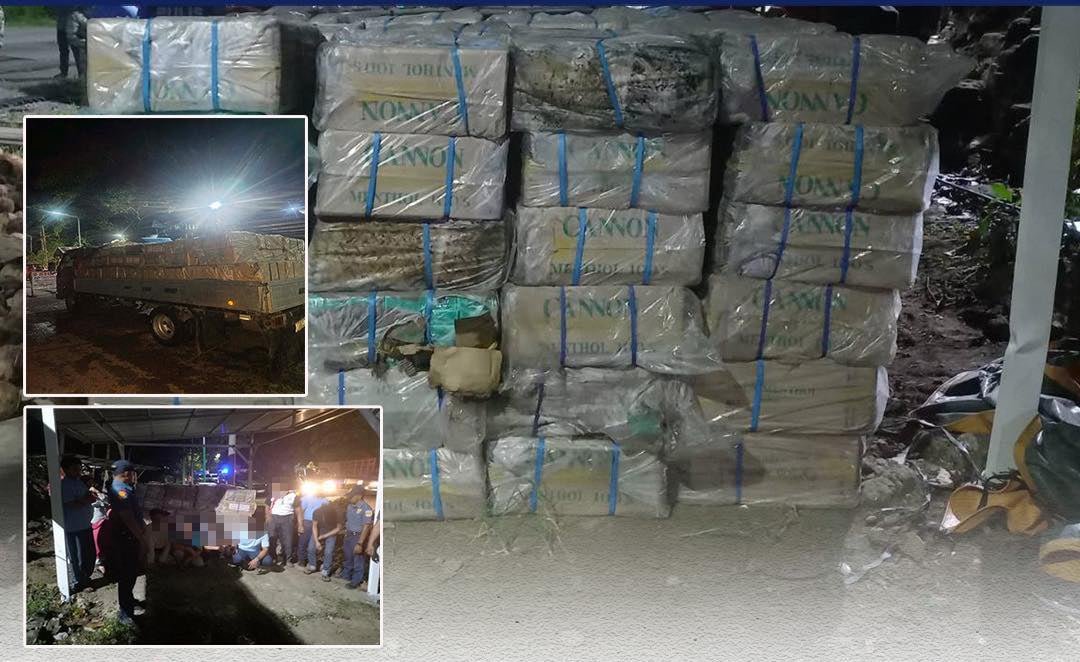
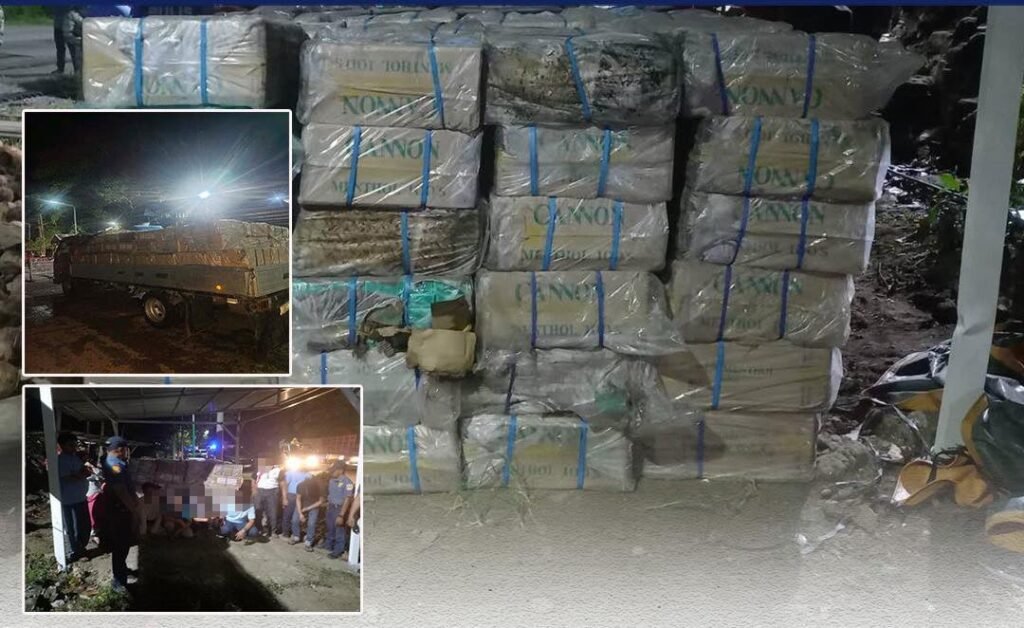
COTABATO CITY (April 23) — Nearly P50 million worth of smuggled cigarettes, firearms, and vehicles seized in two operations this week point to an intensifying crackdown—and a stubborn underground economy that continues to move across regions.
The Philippine National Police (PNP) reported 16 arrests tied to anti-smuggling operations in Negros Oriental and Maguindanao del Norte, underscoring what it calls a firm stance against “economic sabotage.”
In Canlaon City, authorities confiscated around P45 million worth of illicit cigarettes and arrested four suspects in a single morning operation. A day later, in Parang, checkpoint operatives intercepted another shipment valued at over P5.4 million, along with a firearm and transport vehicles, leading to 12 more arrests.
For law enforcers, the message is clear: coordination is improving, and interceptions are becoming more frequent.
But the scale of the seizures raises a parallel concern—how much is still getting through.
Smuggled cigarettes remain one of the most persistent forms of illicit trade in the Philippines, undercutting legitimate businesses and draining government revenues that could fund public services. Large-volume hauls like those seized this week suggest organized supply chains that extend beyond isolated operators.
The operations also highlight how smuggling intersects with broader security issues. The recovery of a firearm in Maguindanao points to the overlap between illicit trade and armed activity—an enduring concern in areas with porous transport routes.
Meanwhile, in Western Visayas, the campaign widens beyond smuggling. The Police Regional Office 6 reported P27.19 million worth of illegal drugs seized in early April, alongside 96 arrests. Hundreds of firearms were also taken out of circulation—many voluntarily surrendered, a sign, officials say, of increasing public cooperation.
That cooperation is critical—but uneven.
While arrests and seizures show operational success, they also reflect a reactive system, dependent on intelligence, checkpoints, and periodic raids. Without sustained disruption of supply networks—financing, distribution, and cross-border routes—illicit goods continue to reappear.
For communities, the impact cuts both ways.
On one hand, seizures mean fewer illegal products circulating locally, potentially reducing crime and protecting consumers. On the other, the persistence of these operations suggests that illicit economies remain embedded—providing income for some, even as they erode legal markets and public funds.
The latest figures, then, are both progress and warning.
They show that enforcement is working—but also that the problem is far from contained.