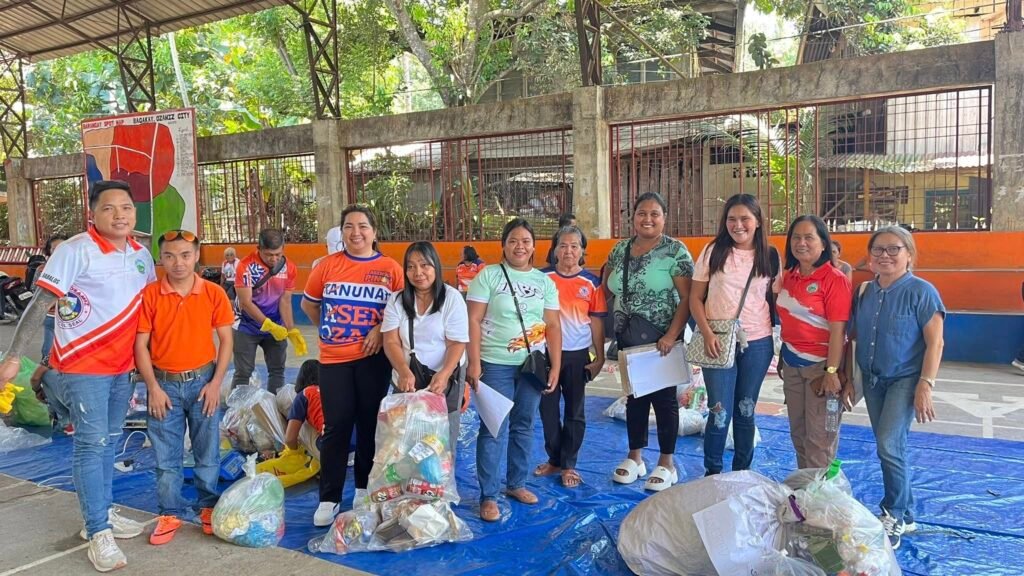
OZAMIZ CITY (April 23) — For five days, trash across all 51 barangays was sorted, weighed, and recorded—turning everyday waste into data for Ozamiz’s long-term plan.
Led by the Department of Environment and Natural Resources with the city’s Solid Waste Environment Management Office, the Waste Analysis and Characterization Study (WACS) is meant to anchor a 10-year strategy on real numbers: how much garbage households and small businesses produce, and how much of it could still be diverted from the landfill.
It’s a necessary step—but also a revealing one.
By measuring waste before disposal, the city can finally see what residents have long experienced: how much of their daily trash is biodegradable, recyclable, or bound for dumpsites. That breakdown could guide investments in composting, materials recovery facilities, and collection systems that actually match community needs.
The immediate impact is visibility. Barangays that joined the exercise now have a clearer picture of their own waste habits—what they throw away, what they could reuse, and where segregation breaks down.
But the test begins after the data is filed.
Sorting waste for a study is controlled and supervised; doing it every day is not. Without consistent enforcement, incentives, and accessible facilities, household-level segregation often fades—leaving most waste to end up in landfills anyway.
There’s also the question of time. A five-day snapshot may not capture seasonal spikes or shifting consumption patterns. If the data is treated as fixed, plans risk being precise on paper but mismatched in practice.
Still, WACS gives Ozamiz something it lacked: a baseline.
Whether that translates into cleaner streets and reduced landfill pressure depends on what comes next—stricter barangay compliance, sustained public participation, and investments that make waste reduction practical, not just procedural.
Because for communities, the real measure of success isn’t how well garbage is analyzed—but whether there’s less of it piling up where they live.