ZAMBOANGA CITY(May 5) — In a coastal province where forests and rivers sustain daily life, protecting wildlife is no longer just a national mandate—it’s becoming a local mission.
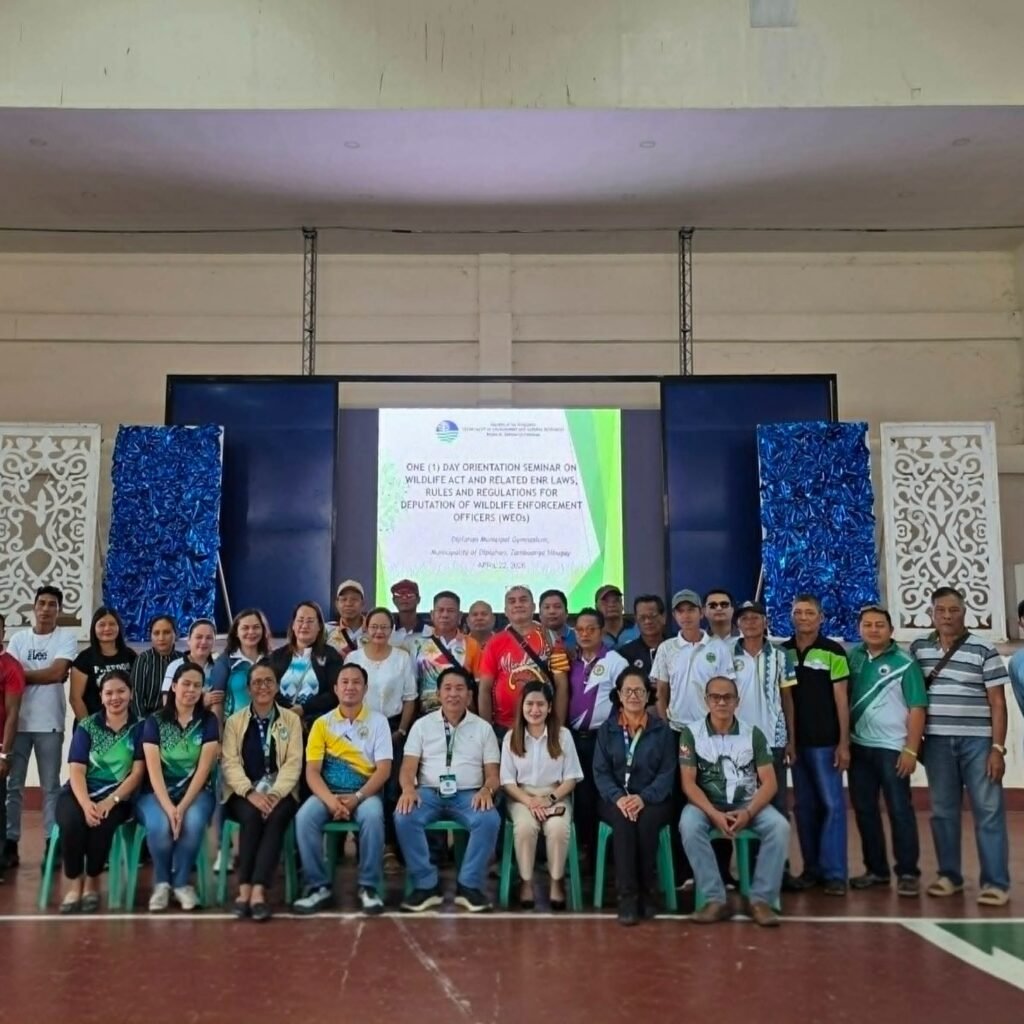
In the town of Diplahan, Zamboanga Sibugay, frontliners are gearing up to take that role seriously after the Department of Environment and Natural Resources (DENR) rolled out a Wildlife Enforcement Officers (WEO) orientation—turning municipal staff into the next line of defense against illegal wildlife trade and habitat destruction.
The training, conducted by DENR Zamboanga Peninsula, equips participants with working knowledge of the country’s wildlife laws and enforcement tools—skills that go beyond theory and into real-world response.
For communities like Diplahan, this matters.
Illegal wildlife activities—from poaching to unregulated trade—don’t just threaten biodiversity; they disrupt ecosystems that farmers and fisherfolk depend on. Strengthening enforcement at the local level means faster response times and more eyes on the ground.
DENR Zamboanga Peninsula Executive Director Marie Angelique Go stressed that local governments and communities are the true frontliners in environmental protection.
“Sustained collaboration is key,” she said, underscoring that national policies only work when backed by active local participation.
On the ground, the impact is already taking shape.
Diplahan Municipal Environment and Natural Resources Officer Cyrus John Asuncion said the training fills a critical gap, giving the town the capability to enforce wildlife laws rather than rely solely on outside intervention.
Once deputized, these trained personnel will have the authority to act—whether it’s intercepting illegal wildlife transport, monitoring habitats, or supporting conservation campaigns.
The effort also brings together a network of expertise, with technical inputs from provincial and community environment offices, ensuring that enforcement is both coordinated and sustained.
For residents, the shift is subtle but significant.
Stronger wildlife protection helps preserve forests that prevent flooding, maintain water sources, and support livelihoods tied to natural resources. It also positions the town to better manage its environment amid growing development pressures.
What began as a seminar is now a step toward building a culture of protection—where safeguarding wildlife is not just a task for authorities, but a shared responsibility across the community.