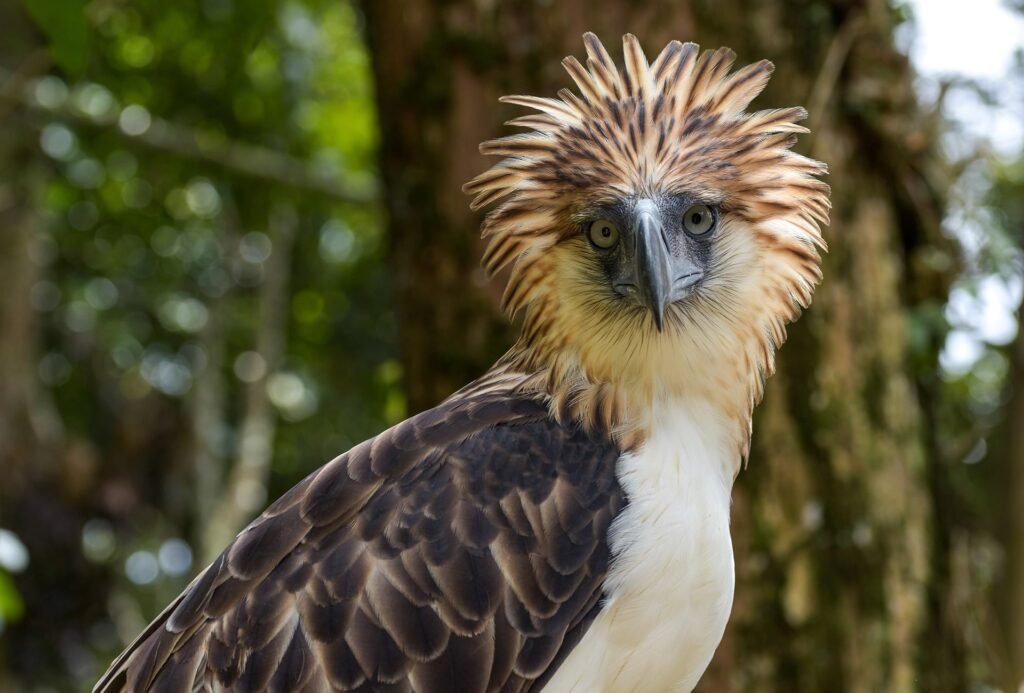
DAVAO CITY(May 5) — As El Niño tightens its grip, protecting the critically endangered Philippine eagle is no longer just about wildlife—it’s about accountability, survival, and climate justice for communities on the frontlines.
The Philippine Eagle Foundation (PEF) is stepping up safeguards to shield the country’s national bird from intensifying heat and food scarcity—while pressing a deeper message: those who protect forests must also be supported.
Inside the Philippine Eagle Center, mitigation measures are already in place—reliable water systems, stable food supply, and shaded habitats that reduce heat stress. Nearby, the forested National Bird Breeding Sanctuary offers a natural buffer, where dense canopy creates a cooler microclimate even during prolonged dry spells.
For PEF, that microclimate is more than a scientific detail—it’s proof of what’s at stake when forests are lost.
“The value of forest cover is the microclimate it creates,” said Jayson Ibañez, pointing out how intact ecosystems can still sustain life despite global climate pressures.
But lessons from the past remain stark. During the 2016 El Niño, food shortages drove some male eagles to abandon nests—an ecological warning tied not just to weather, but to shrinking habitats and human pressure.
Today, PEF is responding with tighter monitoring—and stronger accountability.
Across Mindanao, 52 eagle pairs are being tracked, with focused protection in key nesting sites. Indigenous Forest Guards, drawn from local communities, now serve as frontline stewards—watching over habitats, reporting threats, and ensuring conservation is not imposed from above but rooted on the ground.
In high-risk areas like Mount Apo and parts of Bukidnon, GPS tracking is helping map eagle movements and identify danger zones—from deforestation to encroachment. Since 2018, dozens of released eagles have been fitted with transmitters, turning each flight into data that guides protection efforts.
Yet PEF’s approach goes beyond monitoring—it confronts the bigger question: who bears the burden of climate impacts?
Ahead of El Niño, the foundation launched a reforestation drive targeting three million trees across 1,200 hectares near eagle habitats. But the effort is designed not just to restore forests—it aims to restore balance.
Communities, particularly indigenous groups, are central to this push. They are hired to plant trees, guard forests, and monitor wildlife—roles that recognize their long-standing stewardship while providing income in areas often left behind by development.
“Conservation is not just ecological—it’s economic,” Ibañez said. “And it has to be just.”
That means ensuring that those protecting biodiversity are not the same ones bearing the cost of climate disruption without support.
Stronger forests mean more than eagle survival. They secure water sources, regulate heat, and protect farms—benefits that ripple through entire communities facing the brunt of climate extremes.
As El Niño intensifies, the message from PEF is clear: conservation must come with accountability, and sustainability must include people.
Because saving the Philippine eagle is not just about preserving a species—it’s about defending ecosystems, livelihoods, and the right of communities to thrive in a changing climate.