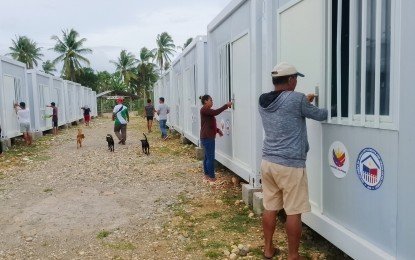
After months of living in tents and makeshift shelters, families displaced by last year’s earthquake in Caraga are finally getting a safer and more comfortable place to stay.
The Department of Human Settlements and Urban Development in the Davao Region turned over 25 modular housing units worth PHP4.3 million on Wednesday to residents whose homes were damaged by the powerful October 2025 earthquake.
Each temporary housing unit costs around PHP175,000 and is intended to provide immediate shelter while affected communities wait for permanent housing assistance and safety clearances in their areas.
DHSUD-11 Regional Director Norman Doral said the units are fully completed and ready for occupancy, with some beneficiaries already receiving their keys during the turnover.
“We’re happy they finally have a place to live comfortably after several months,” Doral said.
For survivors, the modular homes offer relief after enduring months of uncertainty under difficult living conditions.
Beneficiary Predeswinda Magtana recalled how her family struggled after their house was destroyed during the quake.
“After the earthquake, we only used a tent and makeshift beds. This time, we can finally sleep comfortably,” she said.
Another beneficiary, Miriam Añora, also expressed gratitude for the assistance extended to affected families.
Doral explained that the modular units are designed as emergency shelters while communities recover and assess whether damaged areas are still safe for permanent habitation.
He added that displaced families may still qualify for permanent housing support through programs of the Office of Civil Defense and the National Housing Authority.
According to DHSUD, modular housing has become a faster and more practical response during disasters, especially since building permanent concrete homes takes time while evacuation tents often become overcrowded and uncomfortable for long-term use.
The project also reflects the government’s continuing rehabilitation efforts in quake-hit communities across Davao Oriental, where many families are still rebuilding their homes and livelihoods months after the disaster.
For residents who spent nights inside temporary tents and unstable shelters, the turnover marked more than just the delivery of housing units — it signaled a small but important step toward recovery and normalcy.