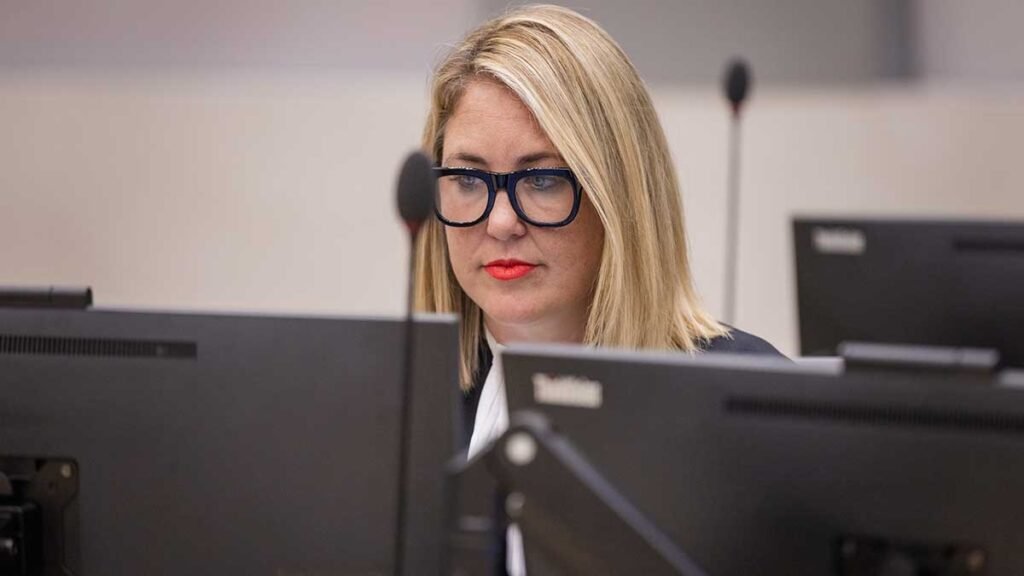
CAGAYAN DE ORO CITY (May 21) — Former president Rodrigo Duterte has strengthened his legal defense before the International Criminal Court with the addition of veteran international criminal lawyer Kate Gibson — a move seen as a major boost to his camp as proceedings over his controversial drug war move forward.
The ICC Registry confirmed Gibson’s appointment as associate counsel on May 18, placing her alongside British barrister Peter Haynes, who recently replaced Nicholas Kaufman as Duterte’s lead lawyer.
But Gibson’s arrival carries deeper significance beyond a routine legal appointment.
She was part of the defense team that secured the dramatic acquittal of former Congolese vice president Jean-Pierre Bemba in one of the ICC’s most consequential reversals — a case that reshaped debates on command responsibility and the limits of prosecutorial evidence in international courts.
For Duterte’s camp, the message is clear: the legal fight is entering a more aggressive and technically complex phase.
The former president, now 81, has spent more than 14 months in detention in The Hague after his March 2025 arrest over allegations tied to his administration’s anti-illegal drugs campaign.
The ICC accuses Duterte of crimes against humanity linked to thousands of deaths during police anti-drug operations and vigilante-style killings that drew global condemnation at the height of his presidency.
While Duterte’s allies continue to frame the case as political persecution, human rights groups have long argued that victims’ families deserve accountability after years of unanswered allegations surrounding extrajudicial killings.
The entry of Gibson and Haynes signals that Duterte’s defense will likely focus heavily on dismantling the prosecution’s evidence, questioning witness credibility, and challenging the ICC’s jurisdiction over the Philippines.
Legal analysts note that international criminal litigation is often won not through political speeches, but through painstaking procedural battles inside the courtroom — where experienced defense lawyers can exploit weaknesses in evidence chains, command responsibility claims, and prosecutorial procedures.
Court records show Gibson has already declared no conflict of interest in taking the case, allowing her immediate integration into the defense team as Trial Chamber III pushes ahead with proceedings.
For many Filipinos, the case remains deeply polarizing.
To Duterte’s supporters, the former president is a leader who imposed order through an uncompromising anti-crime campaign. To critics and families of drug war victims, the ICC proceedings represent a long-awaited test of accountability over one of the bloodiest chapters in recent Philippine history.
With a more seasoned international legal team now in place, the courtroom battle in The Hague is expected to become even more intense in the months ahead.