SURIGAO CITY (May 29) — The government’s aggressive push to accelerate land titling under President Ferdinand Marcos Jr.’s agrarian reform agenda is now colliding with one of Mindanao’s most sensitive fault lines: indigenous land rights.
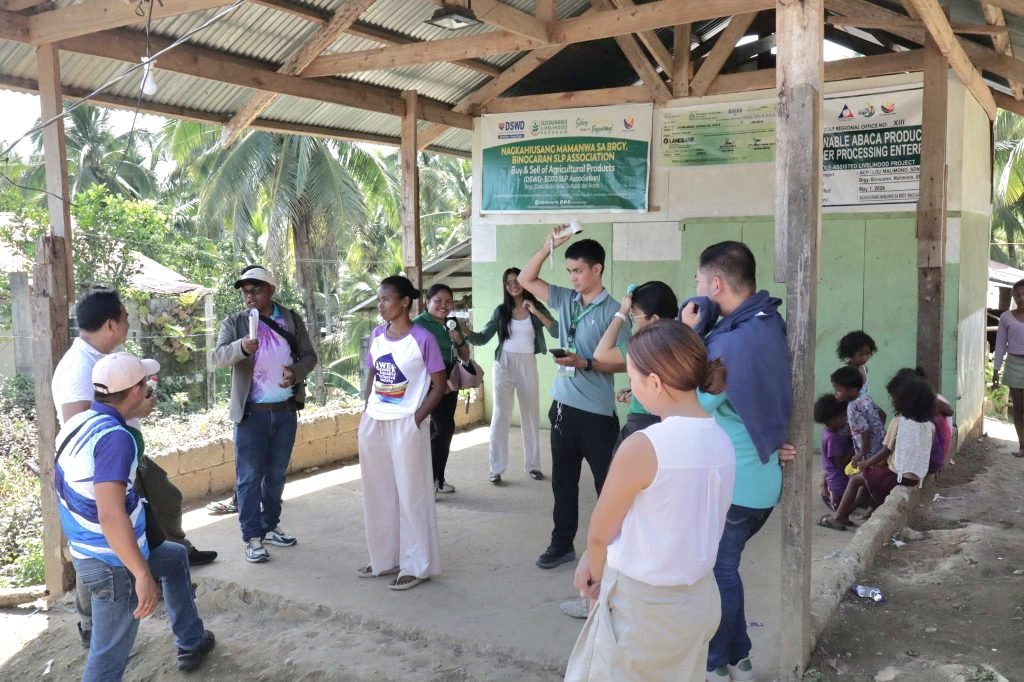
In Barangay Cagtinae, Malimono, Surigao del Norte, the Department of Agrarian Reform (DAR) convened a high-stakes consultation with the Mamanwa indigenous community as officials sought to ease growing concerns over how the national Support to Parcelization of Lands for Individual Titling (SPLIT) Project could affect ancestral domains.
Framed officially as a safeguard consultation, the dialogue exposed the delicate balancing act facing the government as it attempts to fast-track individual land ownership while navigating constitutional protections for Indigenous Cultural Communities (ICCs).
At the center of the issue is Project SPLIT — a nationwide program aimed at subdividing Collective Certificates of Land Ownership Award (CCLOAs) into individual land titles to accelerate agrarian reform and improve land security for beneficiaries.
But in indigenous territories, the process is far more complicated.
Many agrarian reform areas overlap with ancestral lands historically occupied by indigenous communities long before state-backed land distribution systems were established.
For the Mamanwa tribe, one of the country’s oldest indigenous groups, the concern is not merely bureaucratic — it is existential.
Land in indigenous communities is tied not only to livelihood, but to identity, culture, and territorial survival.
Recognizing the political and legal sensitivity of the issue, DAR and partner agencies emphasized that implementation of Project SPLIT in ancestral areas must comply with the Indigenous Peoples’ Rights Act (IPRA), particularly the principle of Free, Prior, and Informed Consent (FPIC).
The consultation brought together a wide network of stakeholders, including the National Commission on Indigenous Peoples (NCIP), the Department of Environment and Natural Resources (DENR), local government officials, Indigenous Peoples Mandatory Representatives (IPMRs), and tribal leaders.
Officials described the Indigenous Peoples Plan (IP Plan) as a critical safeguard mechanism designed to prevent indigenous communities from being sidelined in decisions involving ancestral territories.
“The IP Plan under Project SPLIT is not just a bureaucratic requirement,” said Regional Environmental and Social Safeguards Coordinator Annilyn Chan. “It is a mechanism to guarantee that indigenous communities are active drivers of the land titling process, rather than passive observers.”
Yet the consultation also highlighted the broader structural tensions surrounding land governance in Mindanao, where overlapping claims, weak land documentation systems, ancestral domain assertions, and state agrarian programs have long created conflict and uncertainty.
To bridge policy and implementation gaps, DAR personnel conducted orientations on World Bank-required documentation procedures and directly assisted Mamanwa participants in processing records and forms needed for localized implementation.
Still, beneath the technical discussions lies a larger question confronting the Marcos administration’s land reform strategy: whether economic modernization can proceed without eroding indigenous control over ancestral territories.
For tribal leaders, the promise of individual land titles carries both opportunity and risk.
Datu Rannie, who addressed the gathering, acknowledged the potential economic benefits of formal land ownership while cautiously welcoming the project’s intentions.
“We understand that providing individual land titles is a step toward economic empowerment, security, and progress for many Filipino farmers,” he said. “We recognize the hard work DAR has put into bridging the gaps in land ownership across the country.”
But the consultation itself underscored how deeply contested land remains in many indigenous communities — where legal ownership, customary stewardship, and state development priorities do not always align.
DAR officials said the findings from the dialogue will shape a localized Indigenous Peoples Plan that could later guide parcelization activities in ancestral lands throughout the Caraga region.
For now, the Mamanwa consultation represents more than a routine government meeting.
It is an early test of whether agrarian reform in the Philippines can move forward without repeating the long history of indigenous displacement that has accompanied many state-led land and development programs across Mindanao.