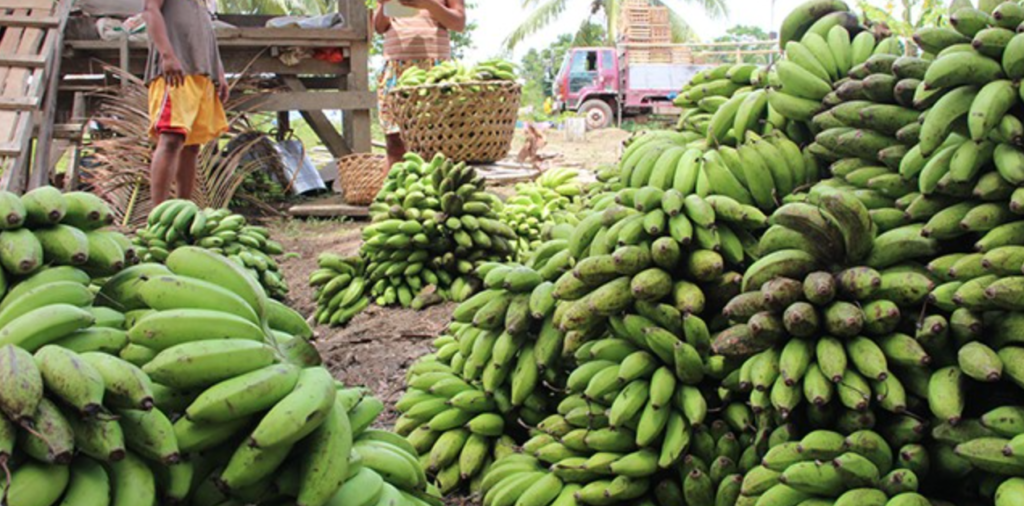
DAVAO CITY (September 7) — Philippine Saba bananas are gaining a foothold in new international markets, opening fresh opportunities for growers—but the expansion will matter most if higher-value exports translate into better incomes and more secure livelihoods for the farming communities that produce them.
The Department of Agriculture in Davao Region (DA-11) said Friday that Philippine Saba, also known as Cardava, bananas are set to enter Hong Kong and New Zealand markets following the signing of two Supply and Purchase Agreements during Asia Fruit Logistica Hong Kong 2026 on Sept. 2.
The agreements were signed by Philippine exporter Avante Agri-Products Philippines Inc. with Cozy and Korner Trading Co. of Hong Kong and Fresh Produce Group (FPG) Ltd. of New Zealand.
Cozy and Korner will serve as the exclusive distributor in Hong Kong, while FPG Ltd. will be the exclusive importer and distributor in New Zealand.
DA-11 said the agreements strengthen trade links between Philippine exporters and international buyers and create new opportunities for premium, export-quality Saba bananas.
For farmers, however, the bigger question is whether access to these markets will lead to more stable farm-gate prices, higher household incomes and better working and living conditions in banana-growing communities.
From export deals to farmer gains
The new agreements come as Philippine exporters expand their reach beyond traditional markets.
Last month, accredited exporter GERB Golden Hands Corp. shipped an initial 20 tons of Cardava bananas to Saudi Arabia. The shipment consisted of 1,540 boxes weighing 13 kilograms each and was expected to arrive within 35 days.
The developments demonstrate the potential of Philippine agriculture to move beyond domestic markets and capture greater value from international trade.
But export growth can benefit rural communities only when farmers have the capacity to meet market requirements and participate fairly in the value chain.
Smallholder growers may face challenges involving production costs, post-harvest handling, quality standards, certification and access to financing.
Without adequate support, the farmers producing export-quality fruit could remain at the bottom of a supply chain whose value increases substantially once their products reach international markets.
Standards should not become barriers
DA-11 Regional Technical Director for Operations Marie Ann Constantino said Philippine producers must understand and comply with the protocols and requirements of importing countries.
“To access the global market, we must know and comply with the market protocols and requirements of the importing country,” Constantino said.
“Meeting these standards is essential in ensuring that our products can successfully enter and compete in international markets,” she added.
The standards are necessary to protect consumers and ensure product quality.
But from a rights-based perspective, government support is equally important in ensuring that small farmers are not excluded simply because they cannot afford the cost of meeting increasingly demanding export requirements.
Training, technical assistance, access to inputs, post-harvest facilities, financing and market information can help make international markets accessible not only to large exporters but also to organized smallholder farmers.
Opening doors beyond bananas
DA-11 also participated in the Sabah International Expo 2026 in Kota Kinabalu, Malaysia, held Sept. 2–6, where Philippine enterprises had opportunities to connect with businesses from the Brunei Darussalam–Indonesia–Malaysia–Philippines East ASEAN Growth Area (BIMP-EAGA) and other ASEAN markets.
The agency said the event also created opportunities for Halal-certified enterprises.
For Davao’s agricultural communities, such platforms could expand opportunities for farmers, processors and small enterprises—provided market access is accompanied by investments in people and local production systems.
The expansion of Saba banana exports therefore presents more than a trade opportunity.
It is a test of whether global market access can become inclusive rural development—where the benefits of export growth reach farm households, create decent livelihood opportunities and strengthen the resilience of communities producing the food that reaches consumers abroad.
The new markets in Hong Kong and New Zealand may be thousands of kilometers away.
But their real impact will be felt much closer to home—on the farms and in the households of the people who grow the bananas.