BUTUAN CITY (June 5) — As artificial intelligence rapidly transforms the way information is produced and consumed, government communicators in the Caraga Region are confronting a growing challenge: how to harness emerging technologies without compromising public trust, data security, and ethical standards.
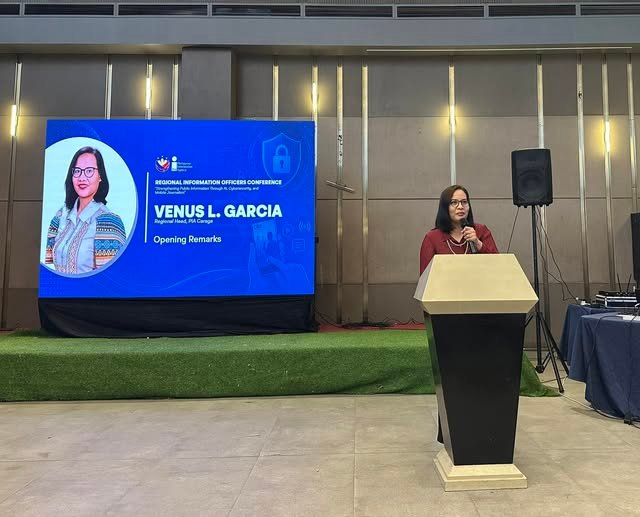
The issue took center stage during the Caraga Regional Information Officers Conference on Thursday, where around 150 public information officers (PIOs) from national government agencies, local government units, and state institutions gathered to strengthen their understanding of artificial intelligence, cybersecurity, and mobile journalism.
While the conference showcased the potential of AI to improve government communication, it also highlighted the increasing pressure on public information officers to navigate a digital environment where misinformation spreads faster, cyber threats grow more sophisticated, and the line between authentic and machine-generated content continues to blur.
Organized by the Philippine Information Agency (PIA), the event featured experts from Caraga State University and the Department of Information and Communications Technology who discussed AI tools, ethical practices, cybersecurity awareness, and digital reporting techniques.
PIA-Caraga Regional Director Venus Garcia underscored the evolving responsibilities of government communicators in an era increasingly shaped by technology.
“As public communicators, we carry the responsibility of ensuring that our communities receive credible, relevant, and accessible information,” Garcia said, noting that emerging technologies present both opportunities and challenges that require continuous learning and adaptation.
The conference comes at a time when government agencies across the country are increasingly integrating AI-powered tools into their operations, from content creation and data analysis to public engagement and service delivery. However, experts caution that the rapid adoption of such technologies must be accompanied by safeguards against misinformation, privacy breaches, and algorithmic bias.
For many information officers, the discussions reflected concerns they encounter in their daily work.
Participants noted that data privacy, cybersecurity, and responsible AI use are no longer technical concerns confined to IT departments but have become central to effective public communication.
“This year’s topics talk about data privacy, the responsible and ethical use of AI tools in government communication, and the growing importance of mobile journalism in today’s fast-paced digital landscape,” said Andy Ordoña of the Bureau of Fisheries and Aquatic Resources.
The emphasis on cybersecurity was particularly significant as government agencies continue to face attempts at unauthorized access, phishing attacks, and data breaches. Information officers, often serving as the public face of their agencies online, are increasingly vulnerable to digital threats that can undermine institutional credibility and public confidence.
Meanwhile, the growing use of mobile journalism reflects changing public expectations for real-time information delivery. Government communicators are being pushed to produce timely, multimedia content using smartphones and social media platforms while ensuring accuracy and compliance with government communication standards.
For Department of Tourism information officer Kylee Doreene Que-Plaza, the conference offered practical tools for addressing these emerging demands.
Yet beyond the technical skills acquired during the one-day event, participants acknowledged a larger challenge: ensuring that government institutions can keep pace with technological change while preserving transparency, accountability, and public trust.
As AI-generated content becomes more common and digital platforms increasingly shape public discourse, the role of government information officers is evolving from simply disseminating information to safeguarding its integrity.
The conference signals a growing recognition that in the digital age, effective governance depends not only on access to technology but also on the capacity of public communicators to use it responsibly. For Caraga’s information officers, the task ahead is clear—embracing innovation while protecting the credibility that remains the foundation of public service.