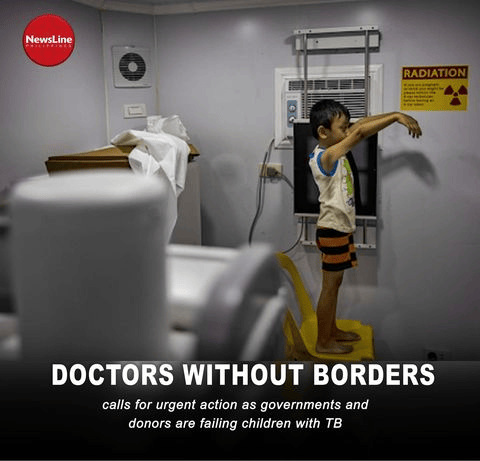
DAVAO CITY – In a conference held in Geneva on October 14, a new report from Doctors Without Borders / Médecins Sans Frontières (MSF) highlights a critical gap in the global response to tuberculosis (TB) in children, revealing that many young patients are neither tested nor treated.
The report, titled TACTIC: Test, Avoid, Cure TB in Children, examines TB policy guidelines in 14 high-burden countries and underscores a significant failure to align national policies with World Health Organization (WHO) recommendations.
Despite advancements in TB treatment, the report shows that many countries are not updating their guidelines to reflect the latest WHO protocols, leaving children vulnerable to one of the world’s deadliest infectious diseases.
The MSF calls on governments to revise their national TB policies and allocate necessary resources for implementation, alongside developing clear action plans with timelines to enhance access to prevention, diagnosis, and treatment for affected children.
“TB is curable, including in children. The WHO has updated policies to ensure the best care for children with TB, yet many countries are slow to adopt these life-saving measures,” said Stijn Deborggraeve, Diagnostics Advisor at the MSF Access Campaign.
“We urge countries, donors, and technical agencies to act decisively to ensure timely diagnosis and treatment for children. Every moment of inaction results in unnecessary loss of life.”
The report reveals concerning statistics: of the 14 policy indicators assessed, only one country’s policies fully aligned with WHO guidance, while seven achieved over 80% alignment. However, four countries fell below 50% alignment. The most significant deficiencies were noted in policies for diagnosing TB in children. For instance, only 5 out of 14 countries have guidelines that allow treatment initiation based on strong symptom indicators, even when bacteriological tests return negative results.
According to WHO estimates, 1.25 million children and adolescents (aged 0-14) develop TB each year, yet only half receive a proper diagnosis and treatment. In response to this crisis, WHO revised its management guidelines in 2022, recommending symptom-based diagnosis and shorter, more effective oral treatment regimens for children.
Dr. Trisha Thadhani, a Filipino TB doctor with MSF in Tondo, Manila, noted the positive reception of new, shorter TB preventive treatments among older children, who find them easier to take. “This is a prime example of how adhering to updated recommendations can enhance patient-centered care and improve national health indicators for TB prevention,” she said.
Despite these advancements, the implementation of new treatment regimens has been slow, and child-friendly formulations of TB medications are often unavailable due to bureaucratic hurdles and funding shortfalls.
“It’s unfortunate that children with TB are still forced to take bitter, crushed medications without proper dosing,” lamented Dr. Cathy Hewison, Head of the MSF TB working group.
“This neglect must end. We call on governments, donors, and global health organizations to act urgently to ensure no child suffers from a preventable, treatable disease like TB. The tools and treatments we have must reach the children who need them most—now,” she added.
The report highlights a pressing need for immediate action to close the gap in TB care for children, ensuring they receive the attention and treatment necessary to combat this preventable disease effectively.
Countries surveyed: Afghanistan, Central African Republic, Democratic Republic of Congo, Guinea, India, Mozambique, Niger, Nigeria, Pakistan, Philippines, Sierra Leone, Somalia, Republic of South Sudan, Uganda.
– robot: *Food News Feature: Child TB Treatment Gaps Addressed Urgently by Doctors Without Borders*
In a recent report released by Doctors Without Borders/Médecins Sans Frontières (MSF), a critical gap in the global response to tuberculosis (TB) in children has been brought to light. The report, titled TACTIC: Test, Avoid, Cure TB in Children, highlights the urgent need to address treatment disparities and align national policies with World Health Organization (WHO) recommendations.
Despite advancements in TB treatment, many countries are failing to update their guidelines in accordance with the latest WHO protocols, leaving children vulnerable to this deadly infectious disease. The MSF is calling for immediate action from governments to revise national TB policies, allocate necessary resources, and develop clear action plans to improve access to prevention, diagnosis, and treatment for affected children.
According to the report, only one country out of the 14 surveyed fully aligns with WHO guidance, while seven countries achieved over 80% alignment. Shockingly, four countries fell below 50% alignment, with significant deficiencies in policies for diagnosing TB in children.
Dr. Stijn Deborggraeve, Diagnostics Advisor at the MSF Access Campaign, emphasized the importance of timely diagnosis and treatment for children, urging countries, donors, and technical agencies to implement life-saving measures without delay.
Despite WHO’s updated guidelines recommending symptom-based diagnosis and more effective oral treatment regimens for children, the implementation of new treatment options has been sluggish. Child-friendly formulations of TB medications are often unavailable due to bureaucratic hurdles and funding shortages.
Dr. Cathy Hewison, Head of the MSF TB working group, emphasized the need for urgent action to ensure that no child suffers from a preventable disease like TB. The tools and treatments available must reach children in need promptly.
The report stresses the immediate need to close the gap in TB care for children, emphasizing the importance of providing attention and treatment to combat this preventable disease effectively.
With the call to action from Doctors Without Borders, governments, donors, and global health organizations must work together to ensure that children receive the care they require to overcome TB. By addressing these treatment gaps urgently, we can strive towards a world where no child suffers needlessly from this preventable disease.