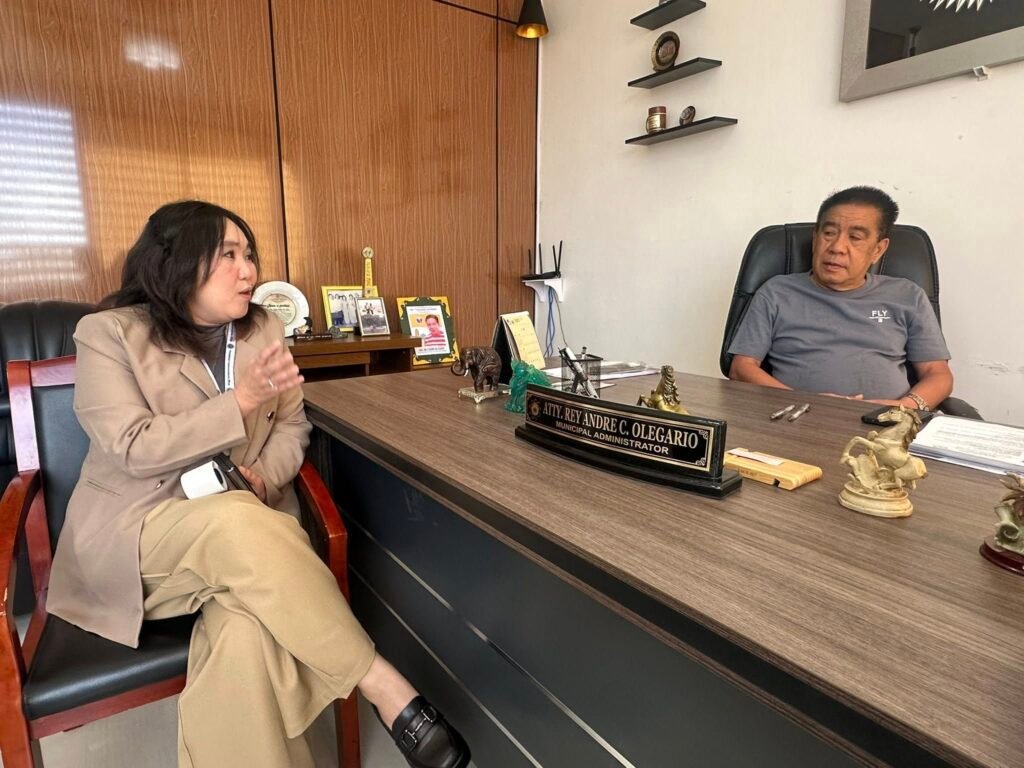
Coordination meeting with Ipil LGU for the May 13 organization of Barangay Information Officers Network (BION) and capacity building. The initiative aims to empower barangay-based IOs who will serve as frontline communicators at the community level, bridging government programs and the public, while also helping counter misinformation and serving as “ASEAN messengers.”
IPIL, Zamboanga Sibugay(May 6) — A new grassroots communication network set to launch in Ipil is being positioned as a frontline defense against misinformation—but questions are emerging on whether it can be sustained beyond its initial rollout.
On May 13, the Philippine Information Agency (PIA) Region IX, with the local government of Ipil and support from the Department of the Interior and Local Government (DILG), will introduce the Barangay Information Officers Network (BION), aiming to equip village-level communicators with skills in media literacy, public engagement, and information dissemination.
The initiative comes at a critical time, as communities face an increasing flood of unverified information, particularly during disasters and public health emergencies.
By training barangay information officers, the program seeks to ensure that accurate, timely, and community-relevant information reaches even the most remote areas.
But while the intent is clear, local observers note that similar efforts in the past have struggled to maintain momentum once initial training ends.
Key questions remain: Will barangay information officers receive sustained funding, technical support, and updated training? How will their performance be monitored—and who will hold them accountable if misinformation still slips through?
Without clear mechanisms for evaluation and support, there is a risk that BION could become another short-term intervention rather than a long-term institutional reform.
Framed within the Philippines’ commitment to a people-centered and resilient ASEAN, the initiative underscores the growing recognition that misinformation is not just a local issue but a regional challenge. However, translating this vision into lasting grassroots systems will require more than one-off capacity-building sessions.
Municipal Information Officer Ralph Francis Garcia Java welcomed the rollout, saying it would strengthen the municipality’s ability to deliver accurate and timely information. Yet the broader challenge lies in ensuring that barangay officers are not only trained—but consistently supported and empowered to act independently when needed.
Beyond skills training, experts point to the need for institutional safeguards: clear protocols for fact-checking, dedicated budget allocations, integration with disaster response systems, and community feedback mechanisms that allow residents to flag inaccuracies.
Equally critical is ensuring that information officers are not reduced to mere conduits of government messaging. For BION to be credible, it must enable two-way communication—where communities can question, verify, and hold local officials accountable.
The rollout in Ipil could mark a step forward in strengthening grassroots communication. But its long-term impact will depend on whether it evolves into a sustained, well-resourced system—or remains a promising initiative that struggles to outlast its launch.
As misinformation continues to shape public perception and decision-making, the real test for BION is not its launch—but its ability to endure, adapt, and earn public trust over time.