
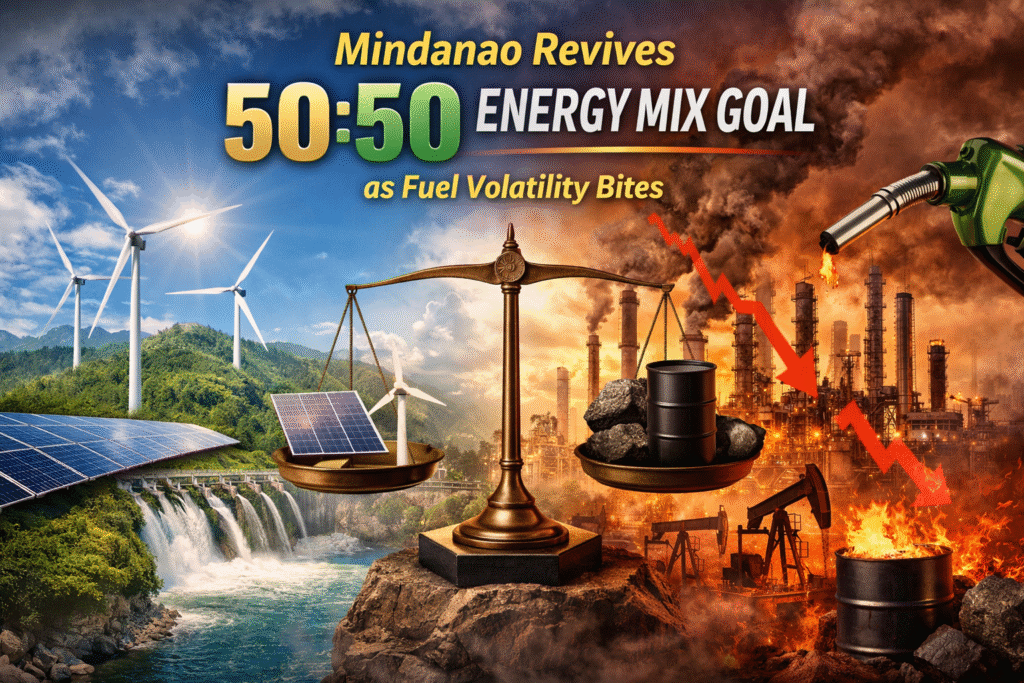
DAVAO CITY (April 17) — A renewed push to rebalance Mindanao’s energy mix is gaining traction, with planners targeting a 50:50 split between renewable energy (RE) and fossil fuels by 2030—an effort framed as both an economic and energy security imperative.
The proposal, advanced by the Mindanao Development Authority (MinDA), comes amid rising global fuel prices and lingering concerns over supply vulnerability tied to imported energy sources.
MinDA Assistant Secretary Romeo Montenegro said the region must “be less dependent on imported sources” and accelerate its transition to renewables, signaling a strategic pivot after years of coal-driven expansion.
For much of the past decade, Mindanao leaned heavily on coal-fired power plants to address chronic shortages and support rapid industrial growth. That shift stabilized supply—but at the cost of higher exposure to global fuel price swings and increased carbon emissions.
The proposed energy mix aims to correct that imbalance.
Under the plan, aging coal facilities would be gradually phased out while investments flow into renewable sources such as solar, geothermal, hydro, and biomass. The approach is not a full departure from fossil fuels but a recalibration—retaining enough conventional baseload capacity to ensure grid reliability while expanding cleaner alternatives.
Officials say Mindanao is already about 40 percent toward the target, with current renewable capacity estimated between 1,000 and 1,500 megawatts. Still, the path to 2030 is far from straightforward.
Balancing cost, capacity, and reliability
The core challenge lies in integration. Renewable energy—particularly solar and hydro—is inherently variable, requiring careful grid management, storage solutions, and backup systems to prevent instability.
Montenegro emphasized the need for “proper balance and procedures,” underscoring that the transition will be incremental rather than abrupt. Coordination with the Department of Energy and private investors is ongoing, particularly in scaling up small and medium-sized hydro and biomass plants across the island.
Why this matters now
The renewed push reflects broader pressures reshaping the energy landscape:
- Fuel price volatility: Global oil and coal prices remain sensitive to geopolitical tensions, directly affecting electricity costs in import-dependent regions.
- Rising demand: Economic expansion and population growth continue to strain Mindanao’s power supply.
- Climate pressures: Increasing scrutiny over emissions is pushing policymakers toward cleaner energy pathways.