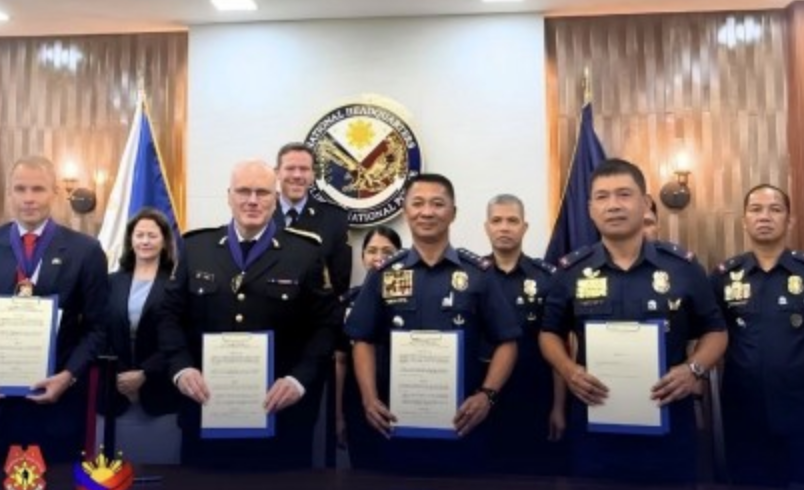
MANILA(July 8) — The Philippine National Police (PNP) is strengthening its fight against online sexual abuse and exploitation of children (OSAEC), forging a deeper intelligence-sharing partnership with Norwegian police to track transnational predators, rescue victims, and dismantle cross-border abuse networks.
The enhanced cooperation follows the signing of a memorandum of understanding between PNP chief Gen. Jose Melencio Nartatez Jr. and Norwegian Deputy Police Commissioner Lars Erik Alfheim, expanding information-sharing between the two law enforcement agencies.
The agreement broadens cooperation beyond existing efforts under the Nordic Liaison Office, which has supported joint operations against OSAEC since 2020, allowing both countries to exchange intelligence more quickly to identify offenders and intervene before more children become victims.
Following the signing, Nartatez directed the Women and Children Protection Center (WCPC), the Anti-Cybercrime Group (ACG), and all Police Regional Offices to immediately integrate intelligence received from Norwegian authorities into operational planning and investigations.
He also ordered expanded training for cyber investigators and digital forensic personnel, drawing on Norwegian expertise in investigating online child exploitation.
“Crime knows no borders, and our response must be equally boundless. This agreement formalizes a vital intelligence pipeline that allows us to strike at the digital infrastructure of these predators, ensuring that our children are protected before they are targeted,” Nartatez said.
He said the PNP is shifting from a largely reactive approach to one driven by intelligence and international collaboration.
“We are no longer just reacting to crimes. We are leveraging global data to identify and dismantle these networks at their source,” he added.
The initiative supports President Ferdinand R. Marcos Jr.’s directive, through Interior Secretary Jonvic Remulla, to intensify the country’s campaign against OSAEC and other cyber-enabled crimes involving children.
According to the Norwegian Embassy in Manila, intelligence previously shared by Norwegian authorities has already helped Philippine law enforcement rescue children from abuse, identify offenders, and launch successful operations against local exploitation rings.
The same intelligence also led to the arrest of perpetrators in Norway who had allegedly paid to commission the abuse of children in the Philippines.
With the new agreement in place, both countries expect faster intelligence exchanges and closer operational coordination to disrupt online child exploitation networks before more children become victims.