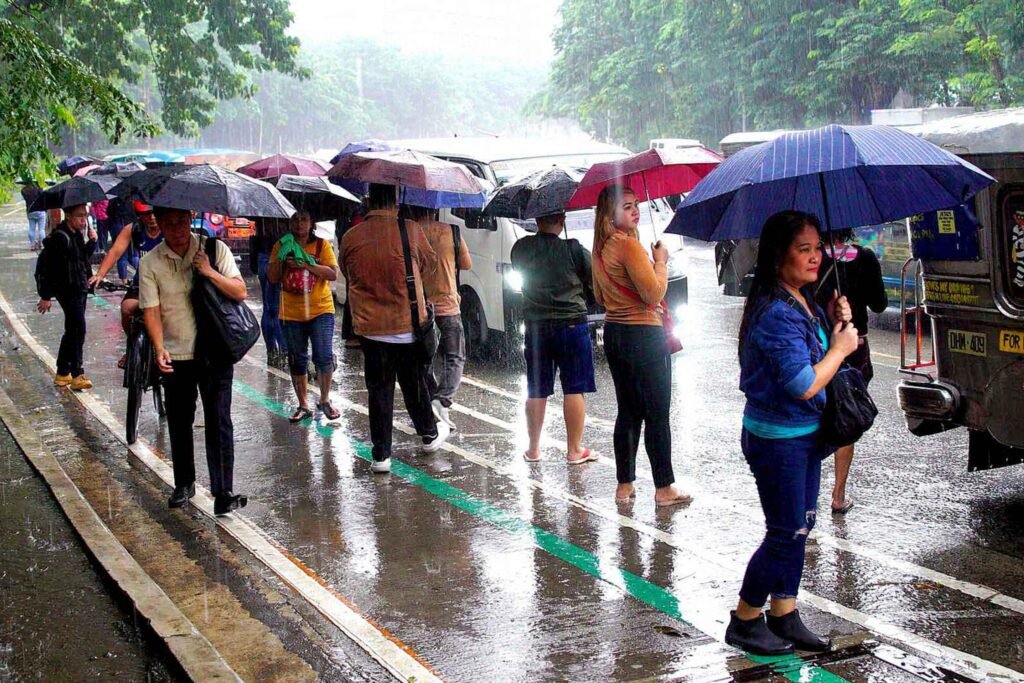
DAVAO CITY (June 5) — The official onset of the rainy season may bring relief from months of intense heat, but for many communities across Mindanao, it also signals the return of a familiar cycle of flooding, landslides, displacement, and agricultural uncertainty.
The Philippine Atmospheric, Geophysical and Astronomical Services Administration (PAGASA) announced that the rainy season has officially begun after five consecutive days of rains associated with the southwest monsoon, or habagat.
While the monsoon’s heaviest effects are expected over the western sections of Luzon and the Visayas, disaster managers and local governments in Mindanao are already preparing for weather disturbances that could trigger localized flooding and other hazards in vulnerable areas.
“The rainy season is here,” PAGASA weather specialist John Manalo said, noting that occasional to frequent rains have become more established in recent days.
For Mindanao, the declaration comes against the backdrop of recurring weather-related disasters that have increasingly affected both urban and rural communities. Provinces prone to flash floods and landslides, particularly in mountainous and riverine areas, often experience significant disruptions even from localized heavy rains.
Agriculture, a key economic driver across the island, also faces renewed uncertainty. While rainfall is essential for crop production, excessive precipitation can damage farms, delay harvests, and affect food supply chains.
PAGASA said periods of reduced rainfall, known as monsoon breaks, may still occur during the season. However, weather forecasters are also watching the possible development of a tropical cyclone outside the Philippine Area of Responsibility (PAR).
The weather disturbance, located west of Calayan, Cagayan, has a high chance of intensifying into a tropical cyclone and could enter PAR in the coming days. Once inside, it will be assigned the local name “Esther,” becoming the country’s fifth tropical cyclone this year.
Forecasters also warned that the developing La Niña conditions could enhance monsoon rains in parts of the country in the coming months, increasing the likelihood of prolonged wet conditions and weather-related hazards.
For communities still recovering from previous floods and displacement, the start of the rainy season is more than a change in weather—it is the beginning of a period that tests the preparedness of local governments, disaster response agencies, farmers, and residents alike.
As rains become more frequent in the weeks ahead, authorities are urging the public to monitor weather advisories closely and remain alert to potential flooding, landslides, and other hazards that often accompany the season’s arrival.