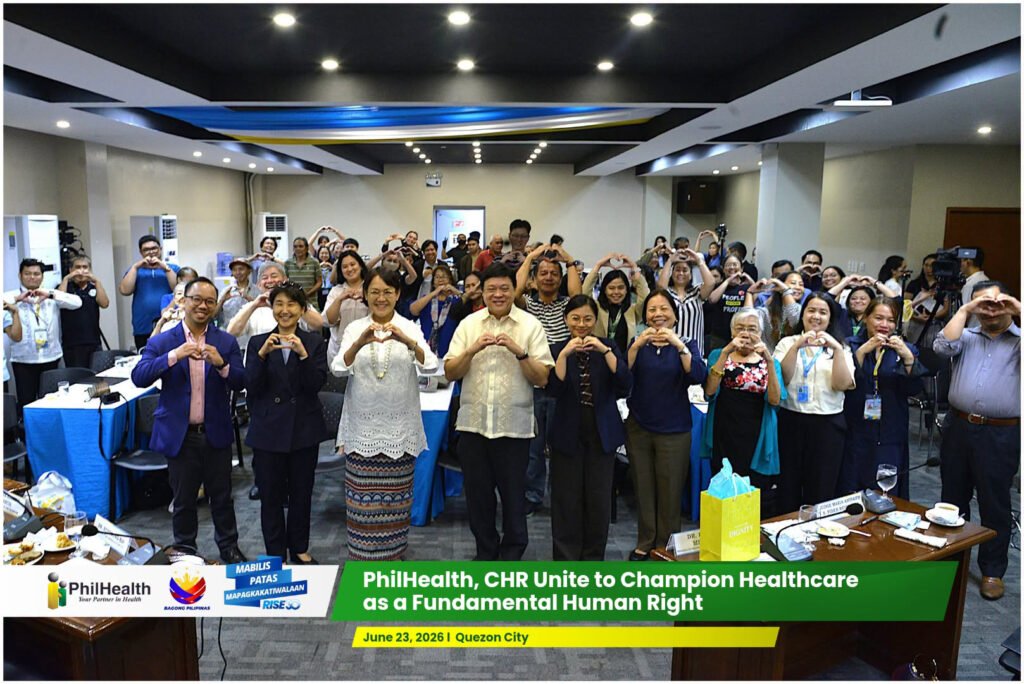
MANILA(June 26) — The partnership between the Philippine Health Insurance Corporation (PhilHealth) and the Commission on Human Rights (CHR) signals a significant shift in how healthcare is being framed in the Philippines—from a service people access when they get sick to a fundamental human right that the government is obligated to protect and fulfill.
At a recent forum titled “Health as a Human Right: Bridging the Healthcare Divide,” health officials, human rights advocates, and civil society groups called for a healthcare system that prioritizes prevention, primary care, and equitable access rather than focusing largely on hospital-based treatment.
The message reflects a growing recognition that health outcomes are shaped not only by medical services but also by public policy, government investment, and social inequalities.
For many Filipinos, particularly those living in remote communities, urban poor settlements, conflict-affected areas, and geographically isolated regions, access to healthcare remains uneven despite the enactment of the Universal Health Care (UHC) Act.
Long travel distances, shortages of health workers, overcrowded facilities, and out-of-pocket expenses continue to prevent many families from obtaining timely medical care.
Against this backdrop, the PhilHealth-CHR initiative seeks to place human rights at the center of health governance.
PhilHealth President Dr. Edwin Mercado emphasized that programs such as Yaman ng Kalusugan Program (YAKAP) aim to strengthen preventive and primary healthcare services so that Filipinos receive care before illnesses become severe and costly.
The approach aligns with international human rights standards that recognize health not merely as access to hospitals and medicines but as the right of every person to accessible, available, acceptable, and quality healthcare services.
For the CHR, the issue goes beyond health financing.
Commissioner Maria Amifaith Fider-Reyes underscored that the right to health is closely linked to the rights to life, dignity, and equality. When people are unable to access essential healthcare because of poverty, discrimination, geography, or social exclusion, the consequences become not only medical but also human rights concerns.
The challenge, however, lies in turning policy commitments into everyday realities.
The Philippines has made important strides through UHC reforms and expanded PhilHealth benefit packages. The Department of Health recently reported that nearly 1,900 mothers benefited from the Expanded Maternity Benefit Package at Dr. Jose Fabella Memorial Hospital within a six-week period, helping reduce hospitalization costs associated with childbirth.
Such programs can significantly ease financial burdens for families. Yet health advocates argue that financial coverage alone does not guarantee access if health facilities remain understaffed, medicines unavailable, or healthcare services physically out of reach.
A rights-based approach therefore requires more than insurance coverage.
It demands sustained investments in rural health units, community-based primary care, maternal and child health services, preventive healthcare, nutrition, sanitation, mental health, and the recruitment and retention of healthcare workers in underserved areas.
It also requires ensuring that vulnerable populations—including Indigenous Peoples, persons with disabilities, older persons, internally displaced communities, and low-income households—can access healthcare without discrimination or hardship.
The PhilHealth-CHR partnership arrives at a time when the country continues to confront persistent health inequities alongside emerging challenges such as climate-related disasters, disease outbreaks, and rising healthcare costs.
For ordinary Filipinos, the true measure of success will not be the signing of agreements or the conduct of forums. It will be whether a mother in a remote barangay can safely give birth, whether a child receives timely immunization, whether an elderly person can access maintenance medicines, and whether families no longer have to choose between seeking treatment and meeting daily needs.
Recognizing health as a human right is an important first step.
The larger task is ensuring that this right is experienced by every Filipino—not only in policy documents and public speeches, but in clinics, hospitals, and communities across the country.