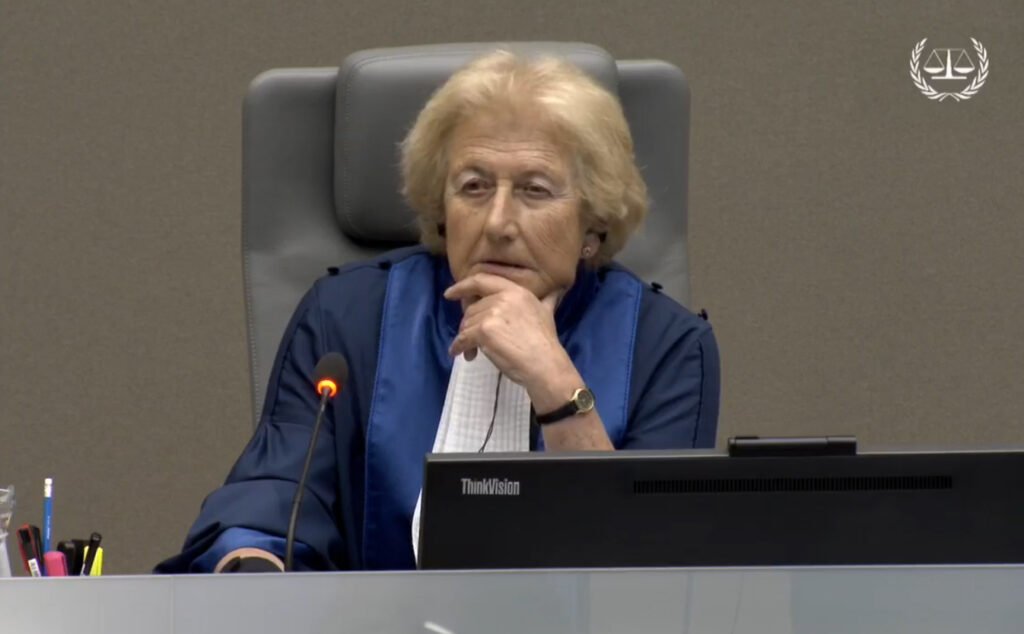
MANILA(June 26) — The International Criminal Court (ICC) has issued a pointed reminder to lawyers involved in the case against former president Rodrigo Duterte: legal battles must be fought in court, not in the media.
During a status conference on Tuesday, Presiding Judge Joanna Korner told both prosecution and defense teams to refrain from public commentary and speculation about the proceedings, emphasizing that the courtroom remains the proper venue for legal arguments.
“The proper forum for arguments is the courtroom, not public or media discourse,” Korner said.
The warning may appear procedural, but it reflects a growing challenge facing high-profile international trials in the age of social media and political polarization.
Few ICC cases have generated as much public debate in the Philippines as the prosecution of Duterte over allegations linked to his anti-drug campaign. Since his arrest and transfer to The Hague, competing narratives have circulated online, with supporters portraying him as a victim of political persecution while critics view the proceedings as a long-awaited opportunity for accountability.
Against that backdrop, ICC judges appear determined to shield the judicial process from external influence.
Korner specifically referenced concerns regarding previous public statements and media appearances by former defense counsel Nicolas Kaufman. The court noted that earlier reminders about professional conduct had not fully prevented public commentary following key rulings.
The incident, according to the chamber, exposed gaps in existing rules governing how lawyers communicate with the media during ongoing proceedings.
The judges signaled that stricter and more comprehensive guidelines may be needed not only for the defense but also for prosecutors and other parties participating in the case.
The move highlights a fundamental principle of international justice: court decisions should be based on evidence presented before judges, not on public relations campaigns, political pressure, or social media narratives.
Yet the issue is not entirely straightforward.
International criminal tribunals depend heavily on public trust and transparency. Victims, affected communities, and the broader public have a legitimate interest in understanding how proceedings unfold, especially in cases involving allegations of serious human rights violations.
The challenge for the ICC is balancing openness with fairness.
Too much public commentary risks undermining confidence in the impartiality of proceedings. Too little public information can fuel misinformation, speculation, and competing political narratives.
Meanwhile, Duterte did not attend the status conference after formally waiving his right to be present. The 81-year-old former president authorized his legal team to represent him during discussions concerning procedural matters ahead of trial.
Beyond questions of media conduct, the hearing also addressed preparations for the court’s electronic evidence management system. Lawyers and court officials discussed new digital platforms intended to manage witness information and documentary evidence more efficiently as the case moves toward trial.
The defense supported parts of the proposed system but raised concerns that transferring evidence into new digital platforms could create technical inconsistencies that might affect the integrity of records.
While those discussions may seem highly technical, they underscore the enormous logistical complexity of international criminal trials, where thousands of documents, witness statements, and pieces of evidence must be managed according to strict legal standards.
Duterte’s trial is scheduled to begin on November 30, 2026.
As preparations continue, the ICC’s latest directive sends a clear message: public debate about the case will undoubtedly continue, but the judges expect the lawyers themselves to make their arguments where they matter most — before the court, under oath, and subject to judicial scrutiny.
For a case carrying profound political, legal, and historical implications for the Philippines, the distinction may prove crucial to the credibility of whatever verdict ultimately emerges.