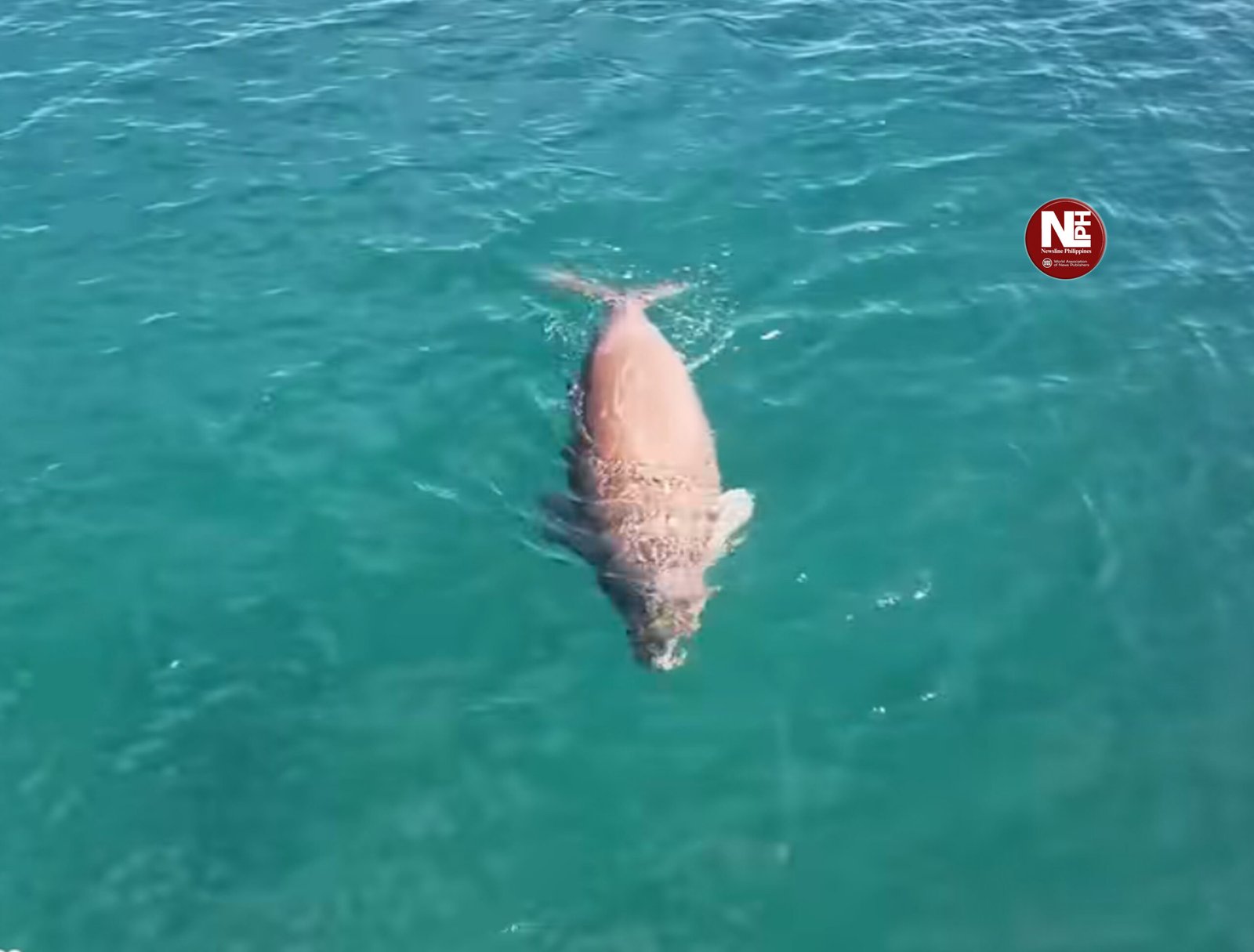

DAVAO CITY (September 18) — A dugong (Dugong dugon), one of the world’s most threatened marine mammals, was documented during an aerial survey conducted by the Protected Area Management Office of the Sarangani Bay Protected Seascape (PAMO-SBPS), the Municipal Environment and Natural Resources Office (MENRO) of Malapatan, and the Bantay Dagat.
The team observed the dugong diving in search of food in nearby coral reefs and displaying what appeared to be natural grooming behavior, rolling along the sandy seabed.
This sighting follows a similar documentation in May 2025, when a mother dugong and her calf were recorded in the same waters—raising hope for the survival of the species in the Sarangani Bay area.
Marine experts emphasized that the presence of dugongs in Malapatan signals both the richness and fragility of the local ecosystem.
“The dugong is critically endangered. Seeing them in Sarangani waters tells us that their habitat is still intact, but it also means we must strengthen conservation efforts to ensure their survival,” an official from PAMO-SBPS said.
Dugongs, often called “sea cows,” play a vital role in maintaining healthy seagrass beds, which in turn support fisheries and protect coastal biodiversity. However, they face threats from habitat loss, destructive fishing practices, and accidental entanglement in nets.
Conservation advocates are urging coastal communities and local governments to step up protection measures—not only to safeguard dugongs but also to preserve the broader marine ecosystem that sustains local livelihoods.
1. What is a Dugong?
- A dugong (Dugong dugon) is a gentle marine mammal, sometimes called a “sea cow,” because it feeds mainly on seagrass.
2. Conservation Status
- Listed as critically endangered in the Philippines due to habitat loss, illegal hunting, and accidental entanglement in fishing gear.
3. Ecological Role
- Dugongs help maintain healthy seagrass beds, which are crucial for fish, sea turtles, and other marine species that coastal communities depend on.
4. Threats
- Coastal development, boat strikes, destructive fishing, and pollution all threaten dugong survival.
5. How to Help Protect Them
- Report dugong sightings to local authorities.
- Avoid destructive fishing practices.
- Support marine protected areas and community-based conservation efforts.