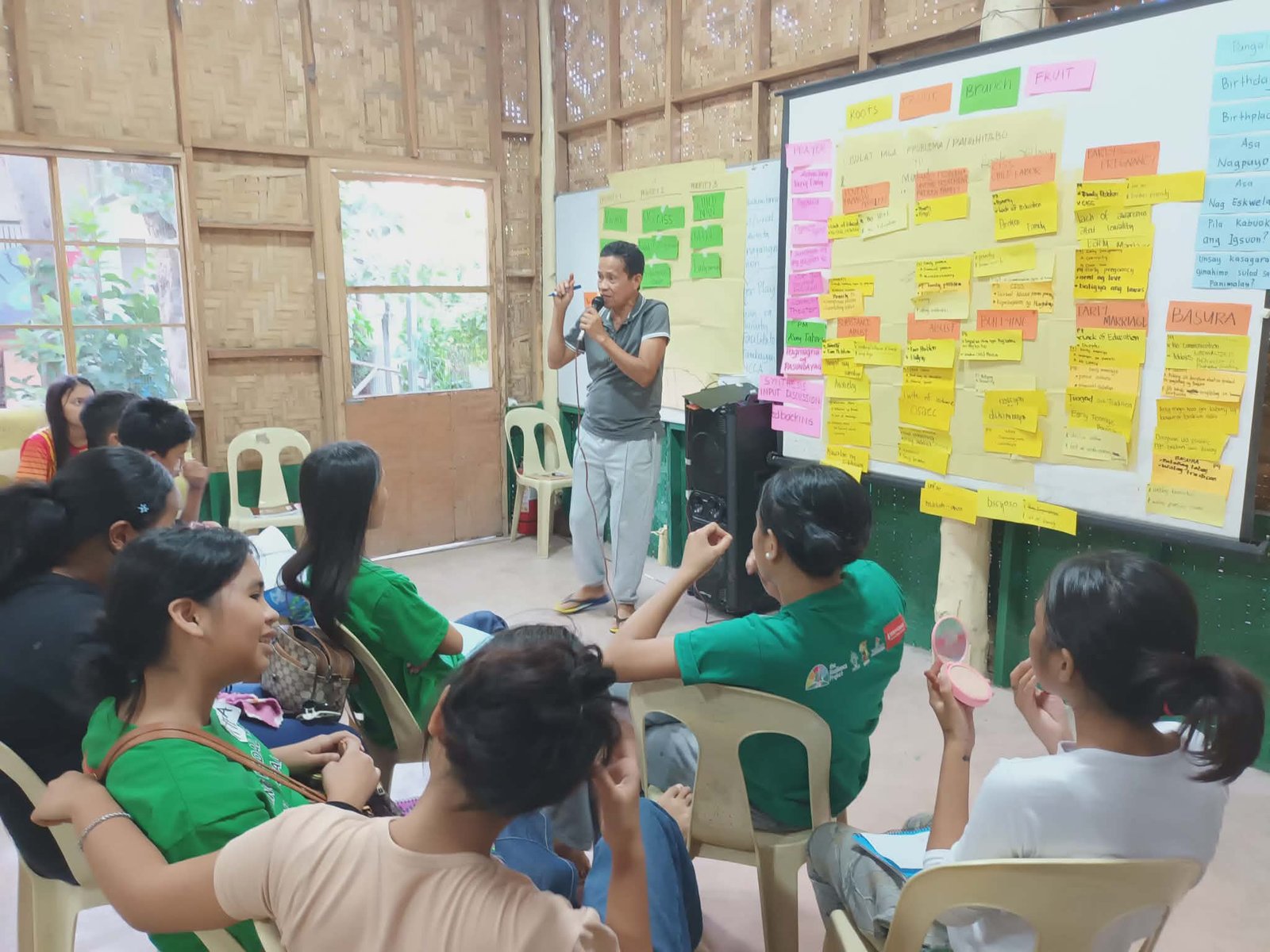
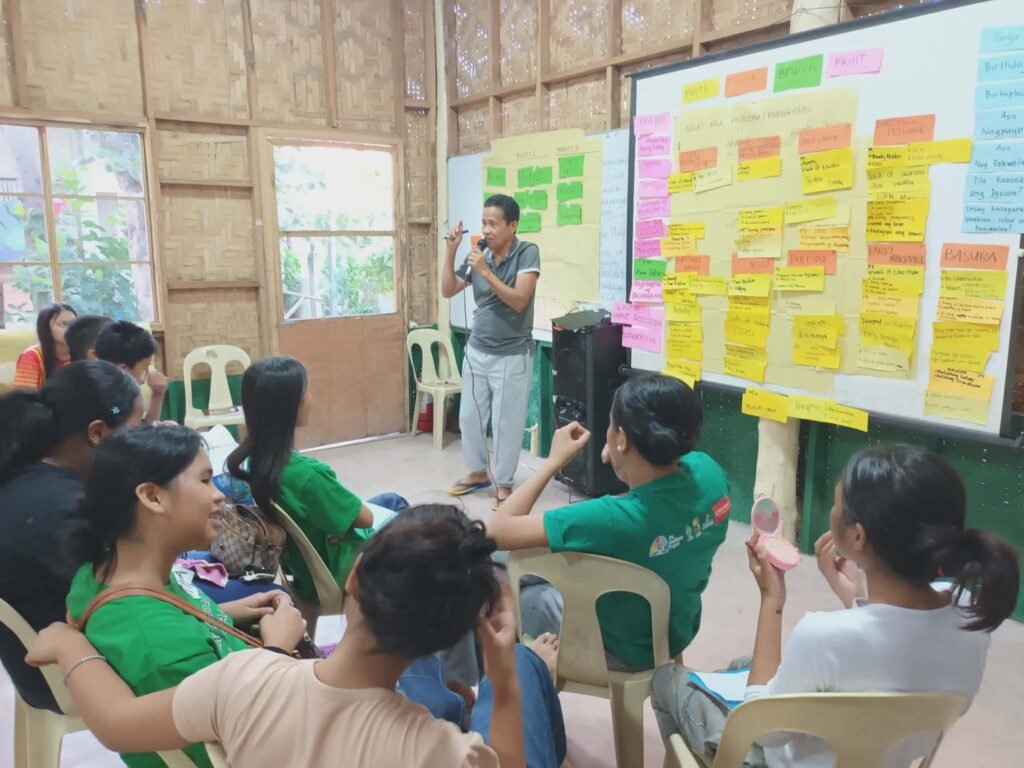
DAVAO CITY (April 16) — In a modest rehearsal space filled with movement, music, and memory, young performers take turns telling stories that are rarely heard on formal stages. These are stories of survival, loss, and hope—now woven into a powerful community theater production titled “Kadalanan sa Paglaum.”
The play is the latest work of IDOL (I Dream Of Light), the resident theater group of Tambayan Center for Children’s Rights, Inc., composed of children and youth from five community-based organizations and Sangguniang Kabataan (SK) partners across Davao City. Many of them come from urban poor communities—some are street-involved, others are at risk or have experienced conflict with the law. Many, especially girls and LGBTQIA+ youth, carry lived experiences of abuse, exploitation, and discrimination.
Rather than hiding these realities, the production places them at the center.
For over a decade, Tambayan has used theater as a tool for healing and social transformation.
One of its most recognized works, the short film “Latus,” created and performed by street-involved adolescent girls, brought international attention to the issue of violence against children. Today, that same spirit continues to evolve through IDOL, where young people are not just performers, but storytellers and advocates.
At the heart of “Kadalanan sa Paglaum” is a collaborative creative process guided by seasoned theater director and performer Tony E. Apat. Working closely with the youth, Apat facilitated the collective development of the play—from initial concept to storyline—ensuring that each scene reflects authentic lived experiences while forming a cohesive narrative.
The production also integrates original songs centered on children’s rights, carefully woven into the narrative. These musical pieces serve as both emotional anchors and calls to action, echoing the realities of life in street situations—where hardship and resilience often coexist.
Adding another layer of expression, the play’s interpretative movements were choreographed through the creative direction of Mark Francis, a cultural arts practitioner deeply engaged in children’s rights advocacy. His work transforms the stage into a space where bodies speak—expressing pain, resistance, and hope beyond words.
The result is a production that blurs the line between art and lived reality.
Developed through a series of workshops, play-making sessions, and community engagements, “Kadalanan sa Paglaum” reflects a participatory approach where young people shape not only the narrative, but the very process of creation. In doing so, they reclaim their voices and challenge the social norms that have long silenced them.
Beyond the performance itself, Tambayan envisions a broader impact. The project seeks to establish a community theater hub that will serve as a space for artistic collaboration, youth leadership, and policy engagement. In partnership with SK councils, schools, and local cultural groups, it aims to expand theater-for-development initiatives that amplify grassroots voices.
The initiative is made possible through the support of the National Commission for Culture and the Arts (NCCA), which continues to fund cultural projects that uphold Filipino identity while advancing social inclusion.
For the young performers of IDOL, however, the impact goes beyond institutional support or public recognition.
On stage, they are no longer defined by the streets or by labels imposed on them. They are authors of their own narratives—transforming lived experience into live performance, and performance into a platform for change.
As the final scene of “Kadalanan sa Paglaum” unfolds, what lingers is not just applause, but a quiet realization: when young people are given space to speak, their stories can move communities—and perhaps, reshape them.