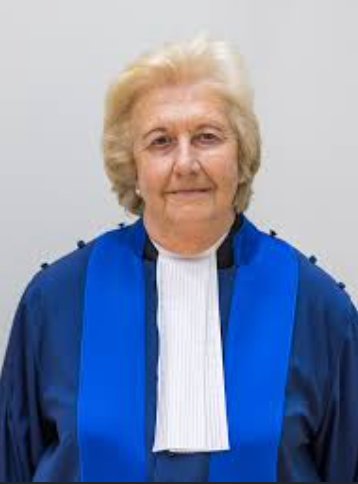
DAVAO CITY (May 1) — The International Criminal Court has appointed British judge Joanna Korner to head the panel that will try former president Rodrigo Duterte, placing renewed international focus on a case deeply tied to Davao City.
In an April 29 ruling, Trial Chamber III confirmed Korner as presiding judge, leading a three-member bench that will hear allegations of crimes against humanity linked to Duterte’s anti-crime and anti-drug campaigns.
For many in Davao, the case reaches back years before Duterte’s presidency—covering the period when he served as mayor and built his tough-on-crime reputation. The charges before the ICC span November 2011 to March 2019, a timeline that overlaps with both his local leadership and national administration.
Seasoned hand at the helm
Korner brings more than 45 years of legal experience, from trying murder and fraud cases in the United Kingdom to prosecuting war crimes in international courts. Before joining the ICC in 2021, she served as a judge in England and worked as a senior prosecutor at the International Criminal Tribunal for the former Yugoslavia, handling high-profile cases against Balkan officials.
Her appointment signals a steady, experienced hand to lead what is expected to be a closely watched and politically sensitive trial.
Global court, local impact
Also sitting in Trial Chamber III are Judge Keebong Paek and Judge Nicolas Guillou.
Duterte faces three counts of crimes against humanity—murder and attempted murder—allegedly committed as part of a widespread and systematic attack against civilians.
While proceedings will unfold thousands of kilometers away in The Hague, the implications resonate strongly in Mindanao, particularly in Davao City, where Duterte’s political career began and where public opinion on his legacy remains sharply divided.
As the case moves forward, residents, victims’ families, and supporters alike are expected to closely follow developments—turning an international courtroom battle into a continuing local conversation about justice, accountability, and the city’s past.