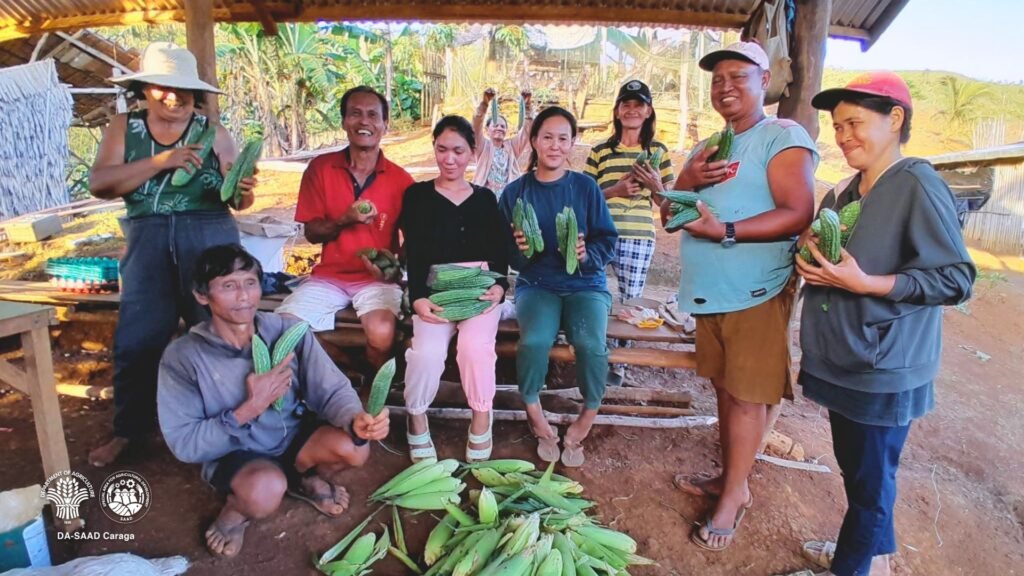
BUTUAN CITY (April 16) — A small farmers’ and fisherfolk group in Dinagat Islands is reporting gains from government support programs, but its progress also underscores broader questions about long-term sustainability and dependence on state assistance.
The Bayanihan Makugihong Mag-uuma ug Mangingisda Asosasyon (BMMMA), a 24-member organization based in Barangay Bayanihan, Libjo, has been a beneficiary of interventions under the Department of Agricultur
Since its organization in 2023, the group has received successive funding support—amounting to over PHP1.3 million across three years—for poultry production, including ready-to-lay chickens, feeds, biologics, and technical training. According to SAAD coordinator Rhyan Libor, the poultry project has generated more than PHP1.5 million in gross egg sales as of early 2026.
On paper, the figures signal a successful rollout of livelihood assistance. The group has also diversified into crop production, receiving additional funding for vegetables and sweet corn, with recent harvests generating modest supplemental income.
Yet development observers note that such gains, while significant at the community level, often remain fragile. Many small farmer groups in geographically isolated areas like Dinagat Islands face persistent challenges—limited market access, fluctuating input costs, and vulnerability to climate shocks—that can quickly erode initial gains once external support tapers off.
BMMMA business manager Jenalyn Menil said the group is now reinvesting part of its earnings to expand poultry production, signaling an attempt to transition from subsidy-driven operations to self-sustaining enterprise. “We are working to sustain this project to help the needs of our members,” she said.
Still, the question of scale remains. With only 24 members, the project’s direct impact is limited, raising concerns about how far such interventions can reach amid widespread rural poverty in the region.
Government programs like SAAD are designed to bridge these gaps by targeting marginalized sectors. But analysts emphasize that without parallel investments in infrastructure, value chains, and market integration, livelihood projects risk becoming isolated success stories rather than drivers of broader rural transformation.
For beneficiaries like BMMMA, the support has made a tangible difference—helping families meet daily needs while supplying local markets with fresh produce. But for long-term resilience, the challenge now lies in moving beyond assistance toward stability in an increasingly uncertain agricultural landscape.